A fresco painted for a village church is a different sort of artwork from one behind museum glass. It was made for the twelve families who could walk to it, and it has spent centuries absorbing candle smoke, damp winters and the occasional clumsy restoration. The Valnerina, the valley of the Nera river that runs southeast from Spoleto, holds more of these than most visitors realise — and on a single well-planned day you can see three or four of them without spending half your time in the car.
What follows is a route that works in practice, not just on paper. It assumes you have a car, that you start early, and that you accept a truth every fresco-hunter in Umbria learns quickly: the best interiors are often locked, and getting in is part of the day's work.
Keep the driving short and the looking long. Roughly twenty-five minutes separates each stop, and the whole loop back to Spoleto is under seventy kilometres.
The apse of Spoleto's Duomo is painted with the Life of the Virgin, begun by Filippo Lippi in the 1460s and left unfinished when he died here in 1469; his workshop, including Fra Diamante, brought it to a close. It is a rare pleasure to see a cycle of this quality in a working cathedral rather than a gallery, and the morning light through the west windows is kind to it.
Go in as soon as the doors open. Climb the nave slowly, read the panels left to right, and then do something most people skip: turn around and look back down the church from the apse. Then leave. Spoleto has a great deal more to offer, but this is a fresco day, and the valley rewards an early start. Park in the metered areas below the old town and walk up, or use the moving walkways from the lower car parks.
The road to Ferentillo follows the river through a narrowing valley, past factories that make nothing much and villages that make the most of the flat land. Then the abbey appears on the slope above, a long, low, Romanesque building with a stone façade that looks plainer than what is inside.
It is the nave that matters. A medieval fresco cycle runs along the walls, patched and faded where the plaster has fallen, and it repays slow looking rather than photographs — stand still for a minute and figures emerge from what first reads as damage. Below, the crypt keeps its columns and carved fragments, and the air is noticeably cooler.
Parts of the complex are used for hospitality, so not every door is yours to open. Ask at reception what can be visited, accept the answer, and put something in the donation box. On a weekday morning you may have the church almost to yourself, which is the whole point of a route like this.
Scheggino is a small, tight knot of stone houses above the Nera, and its trout farms supply restaurants well beyond Umbria. Order simply and sit outside if the weather allows; the valley catches the afternoon sun late. If you want to keep moving, a sandwich from a village shop and a bench by the river works just as well.
Vallo di Nera sits higher up, reached by a road that twists through olive terraces. Walk in through the gate, follow the lanes to the top of the village, and look back down the valley. The parish church here is painted far more densely than a village of this size has any right to expect, with sixteenth-century figures filling the walls — the sort of scheme that survives in small places because nobody ever had the money to redecorate.
It usually is. This is normal and not a sign that you have come on the wrong day. Try these in order:
Two painted interiors before lunch and one after is about right. Fresco fatigue is real: the fourth cycle of the afternoon blurs into the third, and you stop seeing details such as hands, haloes, the occasional dog at the edge of the frame. Better to spend forty focused minutes in one church than fifteen apologetic minutes in three.
Build in a buffer of an hour across the day. A locked door, an unplanned conversation with a parish volunteer, a road closed for a small landslide — any of these can rearrange your timetable, and none of them should ruin it. If you find yourself ahead of schedule, spend the extra time sitting still in a village square rather than adding a fifth stop.
Check opening hours the day before by phone or at the tourist office in Spoleto, since rural churches change their arrangements with the seasons and the availability of volunteers. Carry cash for donations and small purchases, a torch or a phone light for dark interiors, and water. Fuel up in Spoleto rather than relying on the valley.
April to June and September to October give the best balance of long days, open doors and comfortable temperatures; high summer is hot and many interiors close from about half past twelve until mid-afternoon. If you have a second day, add Spello's Santa Maria Maggiore and Montefalco's San Francesco, where Pinturicchio and Benozzo Gozzoli painted on a scale that will make the village frescoes look intimate again. That contrast, in the end, is what makes a day like this worth the driving: the grand cycles teach you how to look, and the little churches remind you why.
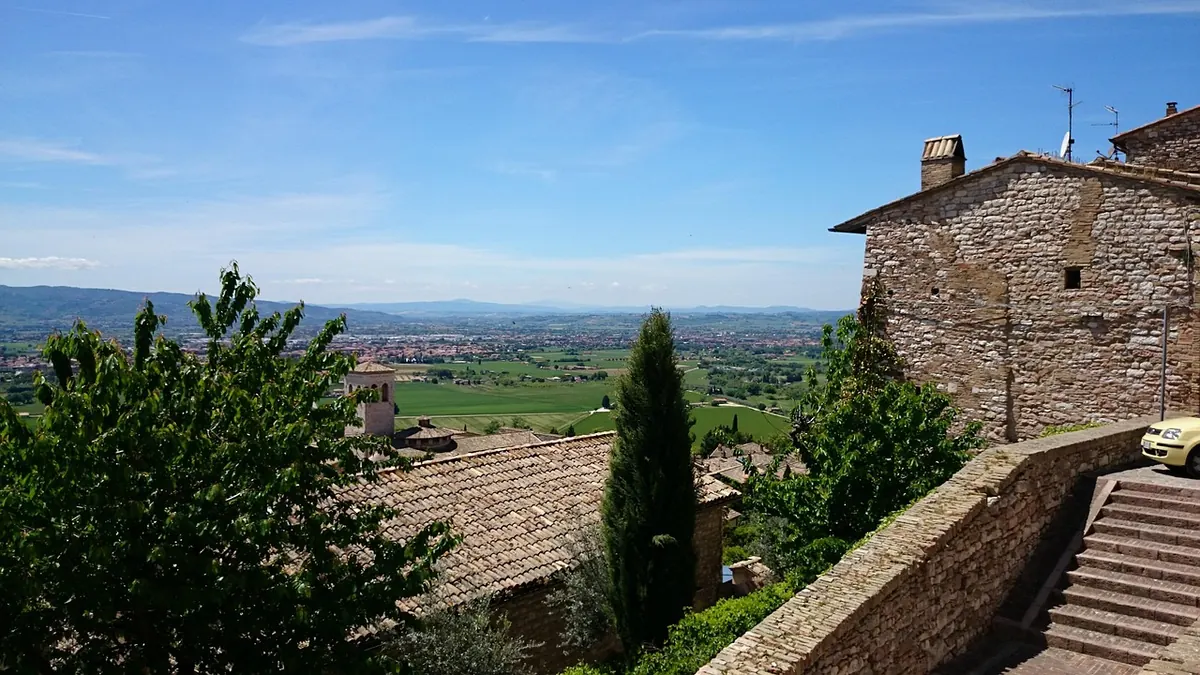
Photo: Johanschersten / Pixabay