You climb a track to a small church with a crooked bell gable, and there on the side wall is a fifteenth-century fresco, flaking at the edges. A bearded man in a torn cloak holds a bleeding thigh; a dog sits at his feet with a loaf in its mouth. Almost everyone who looks at him says the same name, and almost everyone is right — but the figure beside him, holding what looks like a gridiron, is called a dozen different things in a dozen visitor books. Rural frescoes are not harder than museum paintings. They are simply less labelled, more damaged, and more local, and those three facts produce a particular kind of error.
Attributes are a system, not a set of labels. A saint is identified by the combination of dress, gesture, position and object, and the object alone is the weakest of those four. Ask what the figure is doing with the thing in their hand. A man resting a hand on a sword is not necessarily a martyr; a woman holding a palm while a wheel lies broken at her feet has told you her story in a sequence, not in a single prop.
The usual mistake is to spot a familiar shape and stop looking. Someone sees a gridiron and writes Lawrence, when the figure is a bishop holding a small grid-shaped grille that belongs to a local relic, or when the "gridiron" is a window grate painted to suggest a prison. Dress corrects a lot of this. A mitre and crozier point to a bishop saint; armour points to a military martyr or to a patron who was a soldier; a rough hermit's cloak with a bell and a T-shaped staff points to Anthony Abbot long before any pig appears. If the dress and the object disagree, trust the dress and keep looking at the hands.
Some attributes are almost useless on their own, and rural painters reused them constantly because they were cheap to paint and easy to recognise in a dim interior. A short list of the worst offenders:
When two readings survive the test, write both down and keep them both. A wrong certainty is harder to dislodge later than an honest question mark.
Country churches were decorated for a specific community, and the most important figure on the wall is often someone no general handbook will help you with: a beatified hermit from the next valley, a martyr whose relics were translated to the parish in the sixteenth century, a confessor venerated by the confraternity that paid the painter. He may have no attribute at all, or an attribute invented locally — a particular tool, a wound, a book with the community's name.
Before you assign a famous name, check the building itself. The dedication of the church, the saint on the processional banner, the name in the confraternity's account book, the figure placed at the apex of the apse or in the centre of the altarpiece, and any inscription along the hem of a cloak are all stronger evidence than resemblance. Two saints flanking a Madonna are usually the parish patrons, not a random pair, and the pairing often records a plague, a guild, or a family's vow. Parish records, diocesan archives and local historical societies exist for exactly this, and a short email to the parish office costs nothing.
Not every painted mark carries theology. Borders of vines and fruit are often workshop pattern, repeated from a model book because the patron liked them. Masons' marks, scratched crosses, initials cut into the plaster and small votive figures added decades later are part of the object's history but not part of its original programme. Reading a scratched cross as a deliberate symbol in the iconography is a common and understandable overreach.
Name the object, then the dress, then the gesture. The name comes last.
The opposite error matters too: dismissing a motif as decoration when it is not. A sun and moon flanking a Crucifixion are standard, not local sun worship. The hand of God emerging from a cloud is a convention. An ox and an ass at the Nativity are conventions. Learn the standard set first, then you can spot what is genuinely peculiar to this valley.
Loss is not evidence. A missing attribute is missing; it is not an invitation to supply the one that fits your theory. Where the pigment has gone, look at the sinopia — the red underdrawing often survives where the finished surface does not — and look for the faint shadow of a shape in the plaster. Check the halo: a nineteenth-century restorer may have added one to a donor portrait, and a halo added later turns a merchant into a saint.
Watch for repainting and for changes of mind by the original workshop. A hand repainted at the wrist, a book enlarged, a second crown added over a first: these are clues about how the image was used, not noise to be ignored.
Many rural walls hold a devotional assembly — a Madonna enthroned with saints standing in a row — rather than a narrative. Readers who expect a story invent one. Conversely, where there is a cycle, the sequence is easily misread: registers often run in a direction set by the architecture, starting from the altar wall or from the entrance, and a cycle may weave the life of the patron saint through scenes from the life of Christ. Find the recurring protagonist and follow the corners before you decide which scene comes first.
None of this makes the wall less enjoyable. It makes it more interesting: instead of a roll-call of famous names, you end up with a specific place, a specific community and a specific set of decisions made by a painter who knew the people kneeling below. That is the real subject of a countryside fresco, and it is usually the part most worth getting right.
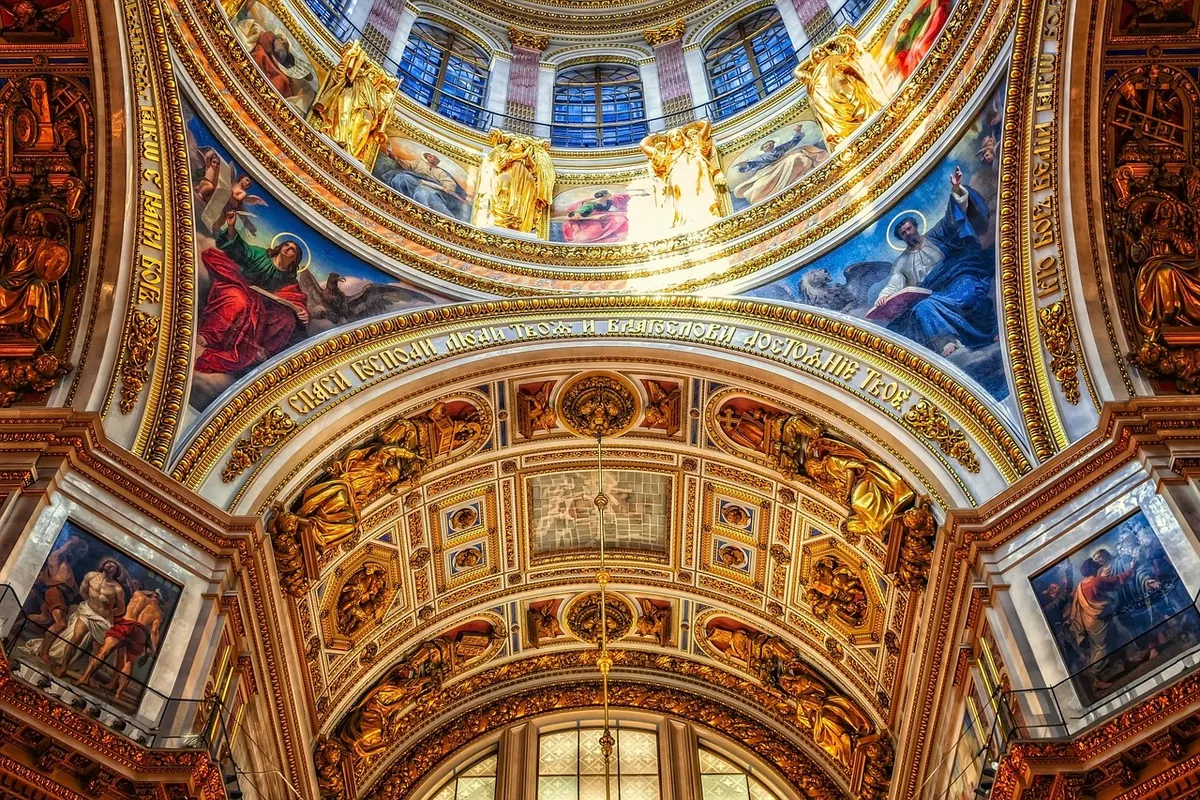
Photo: Tama66 / Pixabay